Writing Toolsby the Writing Center at Harvard University, which includes guides to topics such as "How to Do a Close Reading," "Developing a Thesis," and "How to Do a Comparative Analysis."
New Visiting Professor Mary Dalrymple and her USP module
By Lan Yingjie Yingjie (Life Sciences + English Language + USP, Year 4) is a guest student writer for Highlights
Published: 13 January 2015
The USP welcomes Professor Mary Dalrymple, from the University of Oxford, as the Ngee Ann Kongsi Visiting Professor for Semester 2, AY2014/2015. Having worked both in industrial research and in academia, Prof Dalrymple brings with her a wealth of experience that she will be sharing in her USP class UQR2212: How Linguists Work. I had the privilege of meeting her and her husband at the airport when they arrived from London on the first day of 2015. After she had settled in to our residential college — Cinnamon College (USP) — I sat down with her for a chat.
Prof Dalrymple is no stranger to the USP. She has visited us in 2012 and given a talk on her work in Indonesia, where she produced a grammar of Dusner, a highly-endangered Indonesian language with just three speakers left in the world when she began work on it.
Having stayed briefly in our residential college back then, she told me that she looks forward to spending a whole semester in UTown living amidst the students.
When asked why she chose to come to Singapore for a semester, it turned out that Prof Dalrymple has always had an interest in the linguistics of Asian languages and Singapore is an excellent starting point in that field.
It also helped that her husband, Prof Ken Kahn, also has research interests and a collaboration with the USP’s Deputy Director for Residential Life, A/P Martin Henz (Prof Kahn will also be teaching a course this semester at the USP --UIT2207: Computational Thinking and Modelling).
While this is her first time teaching in Singapore, Prof Dalrymple is no stranger to Asia either: she spent 5 years teaching English in Nepal and Japan after her undergraduate studies before returning to school for a Masters in linguistics to develop her skills further. It was during graduate school however, that she discovered how much she enjoyed linguistics research and that eventually led to a PhD at Stanford University, followed by a long career in the field.
I was curious about Prof Dalrymple’s work at Xerox PARC, the research facility in Palo Alto that has given us the laser printer, the graphical user interface (without which, we would still be typing commands into computers!), the computer mouse and even the WYSIWYG text editor (imagine writing your term papers like how you might code a HTML page by hand), since linguistics seems like such a theoretical field that might not have much application in real life.
Prof Dalrymple explained that she worked on computational linguistics while there, with her theoretical work on grammars helping to inform computer scientists seeking to develop ways for machines to understand and process human language. Research along these lines would be what powers technology such as Siri and other voice control agents, or smart search engines like Bing!
We then talked about the new module — How Linguists Work — she will be teaching beginning 13 Jan. Pedagogically, I found the module to be interesting, particularly that it contains an option after the Recess Week for students to pick a strand — either computational or empirical — to work on.
Group projects would then involve collaborative work between students of both strands , which will take the integrative multidisciplinary approach here in the USP to another level.
To Prof Dalrymple, this is a deliberate arrangement as she felt it was important to bring different perspectives into the research process and she hoped students in her class can experience this firsthand.
Finally, in the age-old debate about the divide between the arts and the science, I asked Prof Dalrymple about where linguistics should be placed on the spectrum of knowledge, since her class is interestingly coded as a USP Science module while other linguistics classes in NUS are offered under the Arts and Social Sciences.
In her view, linguistics is truly something that can span the divide, from the sociolinguistics (which often tends to the literary side of things) to the computational and technical nature of syntax and other scientific areas of the discipline. She added that language is a uniquely human phenomenon and the study of language therefore run the full gamut as a result of how crucial language is to being human.
She thus hopes that students will leave her class with “a sense of diversity of languages” and to be able to, in the process, “lose the idea of prescriptive ideals” (more details about that if you take the class!). Ultimately, she hopes that students will acquire the ability to apply logical thinking skills to the analysis of linguistic phenomena that are ever-present in daily life.
Mr Mustafa (on the right) together with his father, Mr Izzuddin.
The USP has always valued good teaching. Since 2002, the programme has recognised outstanding teachers with the USP Teaching Award. In October 2014, four USP faculty members were honoured by the USP for their excellent teaching in AY2013/14: Dr Jeremy Arnold, A/P Saif Khan, A/P Barbara Ryan, and A/P Kuldip Singh. You can read about their achievementshere, where clicking on each name will bring up a citation.
We are delighted to note that A/P Khan and A/P Singh have also gone on to win the Annual Teaching Excellence Awards (ATEA) at the university level. Announced earlier this month at a ceremony held on 4 May 2015, these university-wide awards were this year handed out to only 55 teachers across NUS for their work in AY2013/14. For A/P Singh, this is his second ATEA, his first having come in 2005 with the Department of Physics. Likewise, A/P Khan first won an ATEA with the Department of Biomolecular and Chemical Engineering in 2012, and was lauded this year for his USP teaching.
At the same ceremony, A/P Peter Vail was placed on the ATEA Honour Roll. This recognition is reserved for NUS faculty members who have won three ATEAs, which A/P Vail did from 2012 to 2014.
Congratulations to all our excellent teachers, and we will see everyone — students and professors — back at the USP for a fresh new semester in August!
By Stacy Ooi (Sociology + USP, Class of 2018) Stacy is a student writer for USP Highlights.
Published: 22 January 2016
Starting tonight and over the weekend (22 to 24 January 2016), USP students will stage its annual theatrical USProductions – a double bill of "404: Not Found" and "Less Than Three” – at Drama Centre Black Box, National Library Board.
Over the years, USProductions has given USP students the opportunity to showcase their creative talents, or simply to experiment with theatre. A few USP students who used to be involved in USProductions in one way or another, have gone on to make their mark in the Singapore theatre scene. Stacy Ooi (Sociology + USP, Class of 2018) catches up with three of them to find out how they have been.
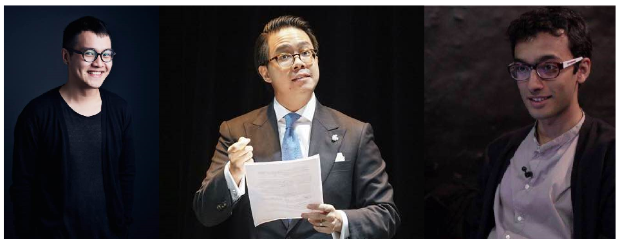
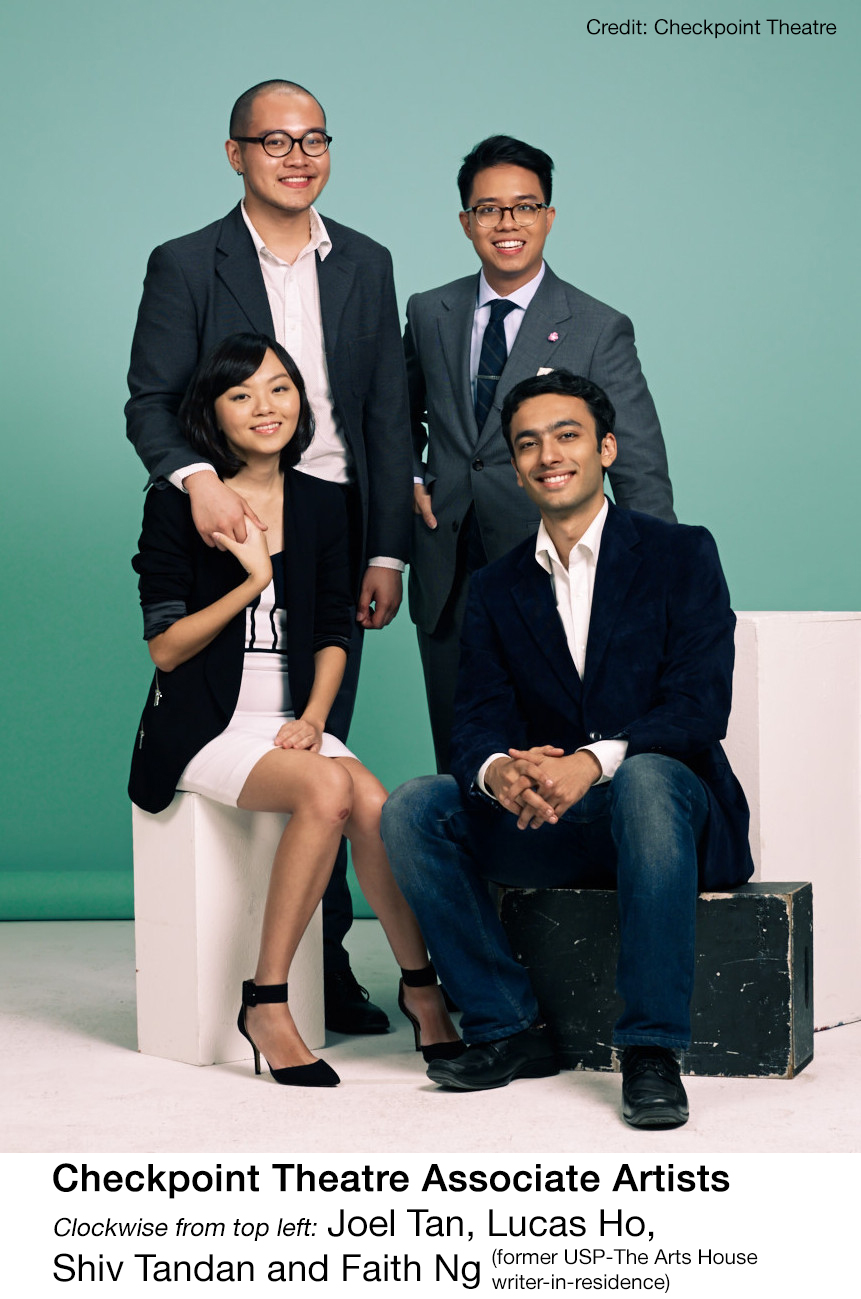
From left to right: Joel Tan, Lucas Ho and Shiv Tandan
Lucas Ho (English Literature + USP, Class of 2009), Joel Tan (English Literature + USP, Class of 2012) and Shiv Tandan (Industrial & Systems Engineering + USP, Class of 2014) are a diverse bunch of thespians. Although they come at theatre from different majors and backgrounds, they have some things in common. All of them cited Prof Huzir Sulaiman and his wife Claire Wong as major influences on their journeys in theatre, and taking Prof Sulaiman’s playwriting module was a huge turning point for them. Shiv fondly recalls that Prof Sulaiman was flexible enough to open an extra class for him and his schoolmates, as the module clashed with a core engineering module of theirs.
Today, all of them are Associate Artists at Checkpoint Theatre, a theatre company set up by Huzir Sulaiman and Claire Wong to develop local writing and theatre. It was through Checkpoint Theatre that Joel recently published 'Volume I' of his collected plays. It was also with Checkpoint Theatre that Shiv was able to re-stage his 2011 play, which was nominated for Best Original Script at the Straits Time Life! Theatre Awards. Read on to find out what they love about theatre, how to write a good dialogue and getting things done in NUS.
How would you describe yourself and your work, in one sentence?
Lucas: I write chiefly for the stage, and I try to write stuff that I would like to see staged, very simply.
Joel: My work and I are both thoroughly caffeinated, borderline alcoholic and unfashionably Singaporean.
Shiv: I’m an engineer turned theatre and filmmaker person. I guess I'm always trying to come up with ways in which I can do something with both, and keep integrating things between this and that.
What do you love about theatre, and what motivates you to keep writing or creating?
Lucas: Everything about creative writing is challenging, but becomes rewarding when you've somehow managed to capture or distill a truth about human experience.
Joel: It varies with each play. I mean that each play has a very different set of impulses. But it's usually drawn from something I observe in the world that provokes a response in me. Sometimes I'm seized by an image, as in People, where the play began for me with six people, unrelated, all breathing quietly in the same space; or in Mosaic by the orange glow of street-lights in a dark, abandoned mosaic playground.
What keeps me going is the theatre's social component, I suppose. I love working with people, and every new show opens up new possibilities for collaboration, and I love that.
Shiv: What I'm trying to create out of all these diverse projects is the ability to say “I'm working on something beyond the medium that I'm using to make it”. It’s not so much I'm writing, directing, or creating an app.
The point is, what are you doing with it? (What motivates me is where) I have a problem that I'm really irritated by. So I would start thinking about how I can write about that problem, help solve that problem or mitigate the effects of the problem. With "Sholay" (a play Shiv wrote in 2011), I was bothered by change, the sense of placeless-ness I felt when I moved out of home. (The way I dealt with it) could have been a film, or a start-up. But at that point, the way I could express that was through writing for the stage.
How did you find your time in USP?
Joel: When I was in USP, the environment was messy, chaotic and deliriously inspiring. It was queer, it was smart, it was full of people unafraid to be themselves. It was more than just intellectually stimulating — there was a real sense of community and of shared learning. It totally contributed to my theatre journey. It's the kind of space that pushes you out of your comfort zone. I would never have mustered the courage to take a creative writing class if I hadn't been surrounded by people who were so creative and encouraging.
What advice would you give to aspiring USP thespians?
Lucas: Keep on listening. Keep on writing.
Shiv: In general, NUS resources are available to people who want to do awesome things. My experience with NUS has been really good. In Year Three, four of us came together and made our first feature film, an hour-long movie shot entirely in a PGP room…once you prove that you can finish a film, then the machinery really kicks in and NUS will help you a lot. We screened three nights at the Ngee Ann Kongsi Auditorium for free. NUS subsidised the venue, they helped us do the bookings, they talked us through the procedures, about how to get that kind of thing done.
After that we wanted to make a short film. OSA (Office of Student Affairs) actually bought a camera, bought some equipment, and loaned them to us. We helped them figure out what to buy, and then they invested in it.
In that sense, I think the atmosphere in NUS is that people are looking for creative work, and if you’re interested and passionate and will see something through to completion, then there’s nothing stopping you. You have to bang your head against some bureaucratic walls, but I think there is a lot of general goodwill. Everybody running the show in NUS is also a person, so just go and have a conversation. Nothing works out, nothing works out. But there's a big chance that it will - you just have to be persistent.
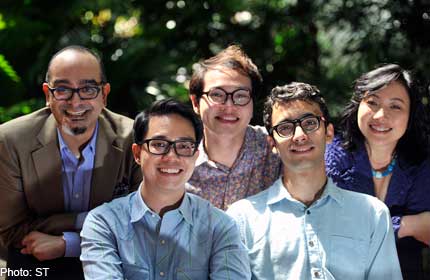
From left to right: Huzir Sulaiman, Lucas Ho, Joel Tan, Shiv Tandan and Claire Wong
Joel: My biggest piece of advice would be to make new work, or stage Singaporean work. There's a tendency to throw a lot of energy into putting up Shakespeare or some hot contemporary American or British playwright, but really the urgency and the immediate spark of truth comes from the place you live in. You can make all sorts of claims about the universality of all drama, but if you're not making work about Singapore, then where's all that energy going?
(With regards to writing good dialogue) I think everyone has it in them. It comes naturally when we tell our friends funny stories over dinner—there's a "third person voice" that we all put on when we imitate someone else. We're all performers. So, rightly or wrongly, I believe drama is something that comes naturally to everyone. Maybe I'm a little more sensitive to it than most people because I'm also very “kaypoh”. It's what some people call having "an ear for dialogue". I think with writing dialogue, it's about cultivating a sense of how a conversation should breathe and flow—where the silences fall, where the conversation intensifies or eases. It's musical. My biggest advice to develop dialogue is to write it and hear it read often, to delight in it, and to use lots of silence.
We congratulate Lucas, Joel and Shiv for having completed the following projects recently. We will look forward to more of them.
Stage: "What I Love About You Is Your Attitude Problem" — A 12-hour overnight festival at The Arts House as part of the Singapore Writers Festival in November 2015. It featured works by Shiv Tandan, Lucas Ho and Joel Tan.
"The Good, the Bad and the Sholay" — Written by Shiv Tandan, co-directed by Shiv Tandan and Huzir Sulaiman. A humorous coming-of-age story that chronicled a young boy's journey from boyhood in the small Indian city of Ambala to the metropolis of Singapore. Re-staged as part of the Kalaa Utsavam Festival in November 2015.
"The Emperor's New Clothes" — A musical written by Joel Tan, and staged by W!ld Rice Theatre in December 2015.
Print: "Plays Volume I" — By Joel Tan. Available in the NUS Central Library.
"Voices Clear and True: New Singaporean Plays Volume I" — Featuring works by Shiv Tandan and Lucas Ho. Available in the NUS Central Library.
A student in the Scholars Programme must read and pass:
Eight First-tier Modules worth 32 MCs
Four Advanced Modules worth 16 MCs
First-tier modules
Students in the Scholars Programme are defined either as:
Arts-based students (defined as a student graduating from the Faculty of Arts & Social Sciences or School of Business); or
Science-based students (defined as a student graduating from the Faculty of Engineering, Faculty of Science or School of Computing)
Students from the School of Design and Environment may choose to be either Arts-based or Science-based students.
Students doing a double-degree programme in NUS will follow that of their home faculty.
Students should observe the following First-Tier Module Domain distribution requirements choosing either Option A or Option B:
Domain
Module requirement for Art-based students
Module requirement for Science-based students
Option A
Option B
Option A
Option B
Writing and Critical Thinking
1
1
1
1
University Scholars Seminar
1
1
Humanities and Social Sciences
3
3
4
3
Sciences and Technologies
4
3
3
3
Total
8 modules
8 modules
The Domain distribution requirements outlined in the table above are to ensure that, at the First-Tier level, students are exposed to the main domains of knowledge: Humanities/Social Sciences and Sciences/Technologies. In particular, these requirements reflect the Programme's objective of ensuring a balanced and broad-based, interdisciplinary education for our students. Arts-based students must thus read science modules, and vice-versa.
Students should also take note that they should read a Writing and Critical Thinking module during their first or second semester of enrollment in the Scholars Programme. For information regarding the Singapore Studies requirement in the Scholars Programme, please refer to the relevant section below.
The University Scholars Seminar module introduces students to academic learning at a setting that is less formal than the usual classroom. It exposes students to various academic disciplines and professions with the aim of providing a firmer intellectual basis on which students would plan their Advanced Curriculum study programme. This aspect of the module situates it well within the USP First-Tier Curriculum. Assessed on CS/CU basis, the 4-MC module is completed in two semesters (specifically in the student’s second and third semester at NUS).
For more details regarding the sub-areas of study and modules offered in each Domain, please refer to the following links:
Students in the Scholars Programme will also be required to read four Advanced Modules.
Students can now make use of the advanced curriculum space to pursue interests in academic inquiry, or cultural immersion, or an NOC/iLEAD experience. In order to take advantage of the Advanced Curriculum, it is important for students to plan their studies early. This does not mean that you map out all the modules you want to read while at NUS, but it does mean that you give some serious thought sufficiently early to what you might want to pursue. Some programmes may have prerequisites. For students interested in the academic inquiry option, the University Scholars Seminar module USS2105 is part of the preparation to help students identify research interests.
For more details about the pedagogy and nature of the Advanced Modules, please refer to the following links:
Students in the Scholars Programme must also fulfill one Singapore Studies (SS) requirement during his/her duration in the Programme. This requirement may be satisfied by a choice of modules designated as fulfilling the Singapore Studies requirement in the Inquiry Tier. Students are advised to plan ahead the SS module to read, and to ensure that they fulfil the SS requirement at an early stage of their studies in NUS. You may refer here for this list of designated modules.
Human Resource Module Requirement
School of Design & Environment
SDE students must fulfill a HRM requirement in their faculty curriculum as follows, refer here
Faculty of Engineering
FOE students must fulfill a HRM requirement in their faculty curriculum as follows, refer here
Note: FASS, BIZ, SOC and FOS curriculums do not have HRM requirements.
Under the theme “Sustainable Development and Heritage Conservation”, USP offers a Study Trip for Engagement and EnRichment (STEER) to Rajasthan, India. STEER India will explore Rajasthan’s social sector, tourism sector and historical heritage. This trip is offered in collaboration with Mody University and NUS International Relations Office.
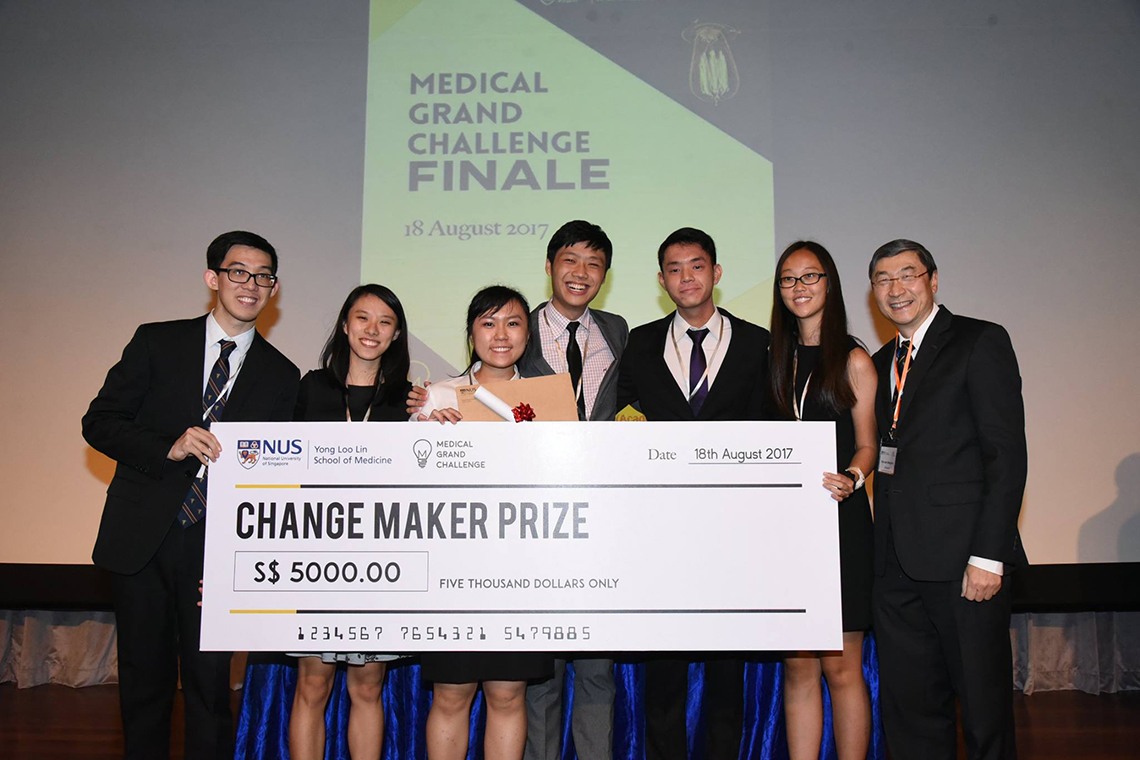
USP students Moh Su Jin(BIZ + USP, Class of 2019) andKeane Looi Yi Xian(Computing + USP, Class of 2019) participated in theNUS Medical Grand Challenge. Su Jin's team won the Change Maker Prize for the most creative and impactful project while Keane's team won the People's Choice Award for the most popular project.
Organised by theYong Loo Lin School of Medicine, the inaugural Medical Grand Challenge finals was held on 18 August 2017. The competition aims to nurture a culture of curiosity among NUS undergraduates, while encouraging creativity and entrepreneurship. Over the past year, medical students teamed up with other NUS faculties and schools to explore creative solutions to address unmet healthcare needs. The teams presented their ideas and were assessed by a panel of judges for their business strategy, creativity, design quality and healthcare impact.
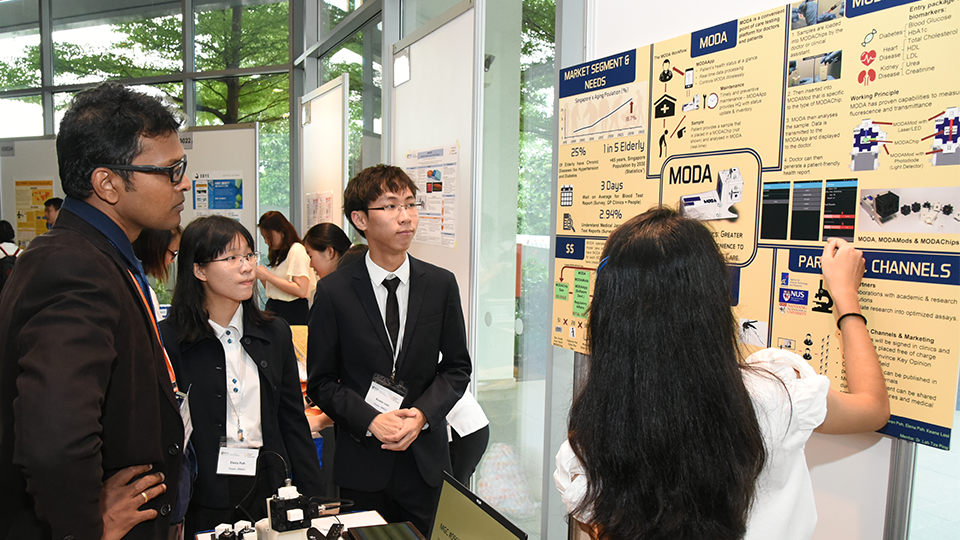
So what was the creative idea by Su Jin’s team? The team came up with aneVand– a lightweight, motion-sensing, inexpensive smartwear for administration of neuromuscular electrical stimulation to treat chronic venous insufficiency, a common condition that causes blood to pool in the legs resulting in swelling, skin changes and leg ulcers. Keane's team had the highest votes for their "Providing On-Site Diagnostics: Greater Productivity & Convenience to Raise Value in Clinical Care", a portable and modular photometric/optimal platform for point of care medical diagnostics.
Congrats Su Jin and Keane! We encourage and support USP students like them in taking part in similar cross-faculty programmes, events and competitions.
Su Jin (2nd from R) and her team presenting their creative project, eVand. (Photo credit: NUS Yong Loo Lin School of Medicine)
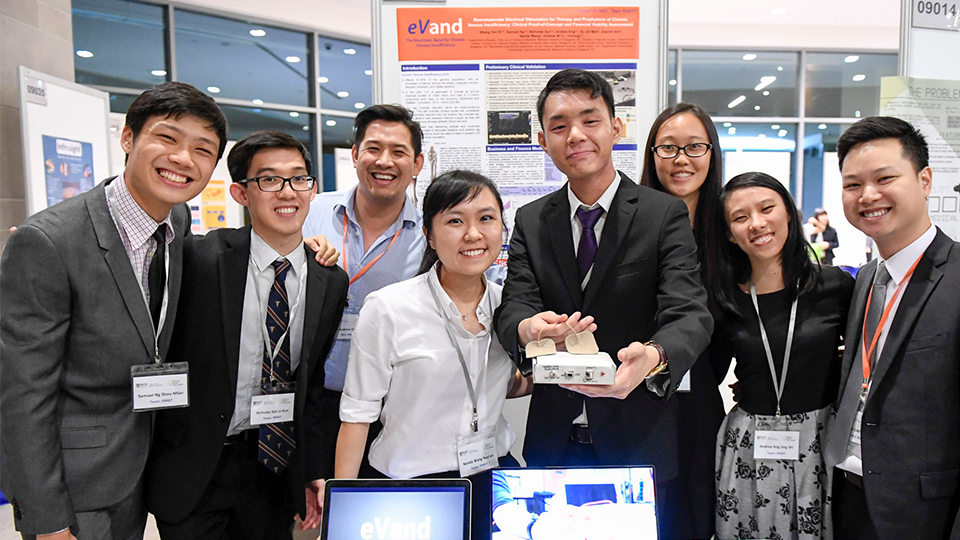
The team at Medical Grand Challenge finals. (Photo credit: NUS Yong Loo Lin School of Medicine)
Keane (2nd from R) and his team receiving their People's Choice Award at the Medical Grand Challenge. (Photo credit: NUS Yong Loo Lin School of Medicine)
A team member of “Providing On-Site Diagnostics: Greater Productivity & Convenience to Raise Value in Clinical Care” sharing more information about the project.(Photo credit: NUS Yong Loo Lin School of Medicine)
USP Alumni Honoured with NUS Outstanding Young Alumni Award
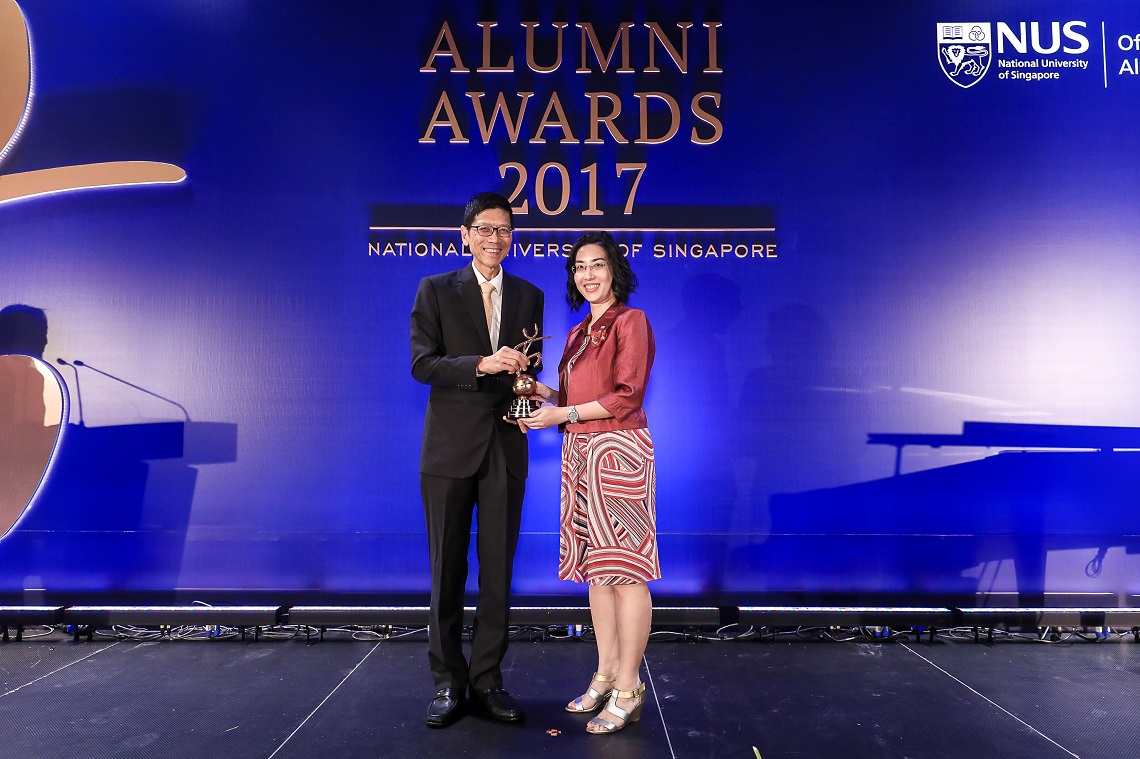
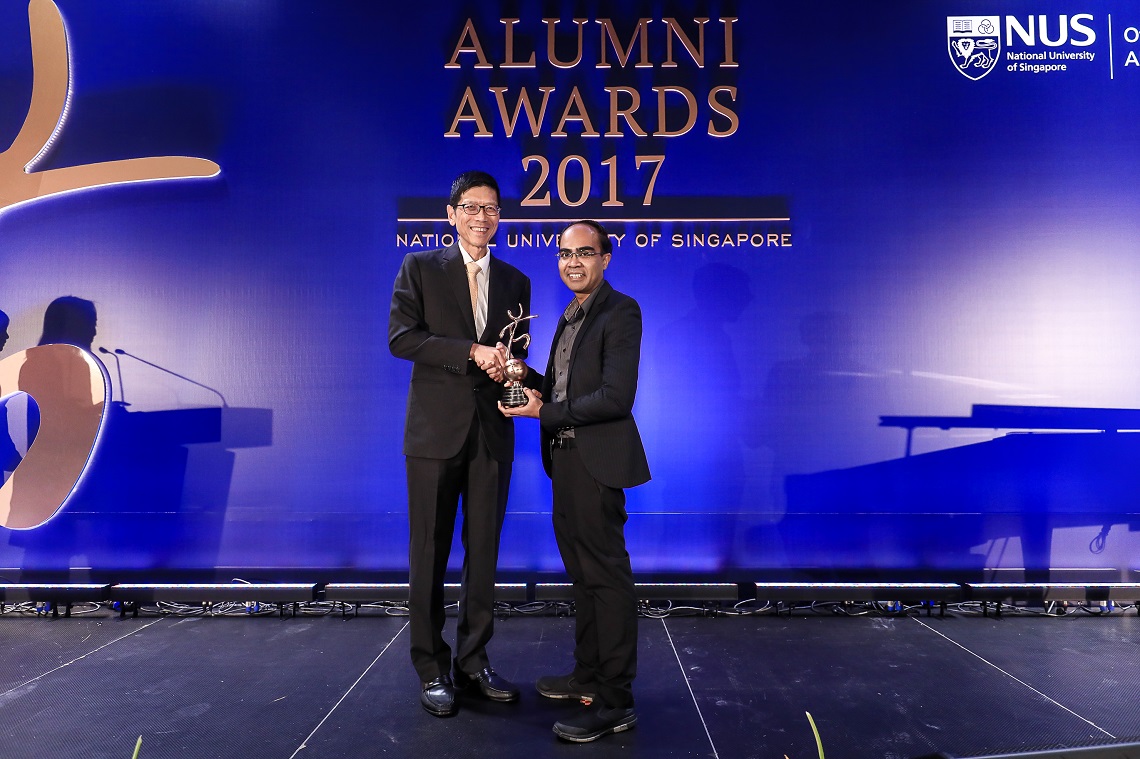
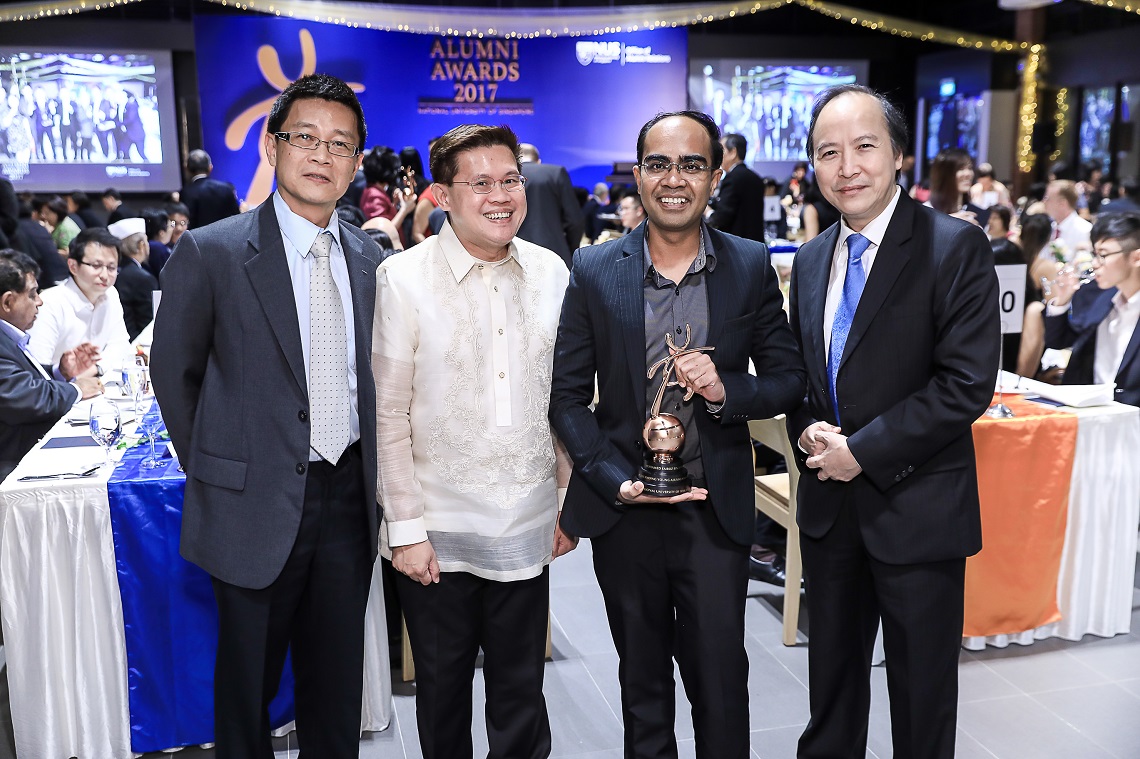
USP alumniBetty Tsai(Chemical Engineering + USP, Class of 2012) andMohamed Fairoz bin Ahmad(Sociology + USP, Class of 2006) were honoured with the prestigious NUS Outstanding Young Alumni Award 2017. The Award recognises alumni aged 40 and below who have distinguished themselves in their chosen fields, and/or rendered excellent volunteer service to NUS and/or the alumni community while exemplifying the best attributes of youth in today's world. Betty and Fairoz received this recognition at theNUS Alumni Awards 2017ceremony held on 23 November 2017.
A Research Scientist at Procter & Gamble International Operations,Bettywas recognised for her outstanding achievements and research innovations. Her research and contributions to the science and technology landscape have been endorsed by prestigious organisations and publications. Since her undergraduate days, Betty has been very active in the University’s outreach events and as a mentor to inspire and encourage younger engineers to sharpen their skills and to make a difference in the world. In particular, she is an advocate for young women in engineering. Betty has gained numerous achievements in the engineering sector. Earlier this year, she gained a place in the Asian Scientist 100 list 2017 edition for her research on the innovation process behind skincare consumer products – readhere.
As forFairoz, he was recognised for his outstanding achievements and leadership in community service. He founded Chapter W, a non-profit social enterprise that provides innovative, suitable and sustainable solutions to help and empower the poor in Indonesia. In particular, his social enterprise adopts an innovative model of empowering rural women and bringing solar energy to rural areas, which has benefitted more than 24,000 people. As an alumnus, Fairoz continues to raise awareness of social entrepreneurship amongst NUS students and alumni, through talks and sharing sessions – readherefor Fairoz’s session during The Rector’s Programme at USP. Chapter W also provides fellowship opportunities for students, and is working with USP to develop possible field research projects for students.
Heartiest congratulations, Betty and Fairoz! We are most proud of your wonderful contributions to NUS and USP. We wish you success in your career and community works.
Betty receiving her award from NUS President Professor Tan Chorh Chuan during the ceremony.
Fairoz receiving his award from NUS President Professor Tan Chorh Chuan during the ceremony.
Betty and USP Director Associate Professor Kang Hway Chuan during the ceremony.
From L to R: USP Director Assoc Prof Kang Hway Chuan, USP Deputy Director Assoc Prof Albert Teo, Fairoz Ahmad and NUS Dean of Students Assoc Prof Peter Pang
So We Do Not Forget: Learning about Singapore and the Second World War
Contributed by Assistant Professor Cheah Wui Ling
Published: 25 September 2015
On 12 September 2015, Singapore marked the 70th anniversary of Japan’s surrender at the end of the Second World War.
The 12 September 1945 surrender ceremony at Singapore’s old City Hall officially brought to an end one of the darkest periods in Singapore’s history.
At the University Scholars Programme (USP), students acquainted themselves with the surrender’s significance through a series of talks that culminated with students attending a remembrance ceremony at the Kranji War Cemetery.
Talk on post-war justice by Assistant Professor Cheah Wui Ling (L) and Dr Moritz Vormbaum (R)
On 8 September 2015 and 10 September 2015, Assistant Professor Cheah Wui Ling (who is with NUS Faculty of Law and teaches at the USP) and Dr Moritz Vormbaum (Senior Researcher from Humboldt University) organised two talks at the USP and NUS Law on post-war justice.
Both researchers are collaborating in a Humboldt-NUS funded comparative study of British-run war crimes trials in Singapore and Germany.
USP students who attended the 8 September 2015 talk at University Town engaged both speakers on numerous topics.
Many students were interested in how these post-war trials dealt with the responsibility of lower-ranking soldiers. Participants were also intrigued by the steps taken by Germany to address its wartime responsibility.
Dr Vormbaum shared with us some thoughts about his talk at the USP.
“The discussion during the seminar was lively and inspiring. It was a great pleasure to debate with NUS students on a high academic level. I was impressed by the well-organised and well-equipped NUS campuses and the learning atmosphere there. In my view, German universities can learn a lot from NUS in this regard.”
USP students studying the names engraved on the walls at the Kranji War Memorial
The ceremony featured thought-provoking speeches by dignitaries and poetry readings. At the end of the ceremony, diplomatic representatives from different countries, including Japan’s Ambassador to Singapore, laid poppy wreaths at the foot of the Kranji War Memorial.
Members of the Japanese community presented armfuls of brightly coloured paper cranes symbolising peace, a particularly relevant message in light of ongoing tensions over various issues in East Asia.
When exploring the Kranji War Cemetery before and after the remembrance ceremony, USP students were particularly struck by local names engraved on the memorial’s walls.
Many students spent some time in the cemetery for Muslim soldiers located behind the main memorial. Some commented on the young age of those who fell while others discussed less known vignettes of Singapore’s history, including the fight put up by the Dalforce and the Malay Regiment at the ill-fated Battle for Singapore.
The week leading up to the 70th anniversary of Japan’s Second World War surrender was a good opportunity for USP students to learn about wartime sacrifice and post-war justice in Singapore. Hopefully, this will lead to more conversations and debates about less-known periods in Singapore’s story.
Note: Assistant Professor Cheah is also working with NUS law alumnus Ms Ng Pei Yi on a public outreach project and web portal on the Singapore trials. The project is supported by National Heritage Board (Singapore). They are currently still looking for donors and volunteers. Those who would like to get involved should get in touch with Assistant Professor Cheah at lawcwl@nus.edu.sg or Ms Ng at mail.peiyi@gmail.com.
Alum Dr Reuben Ng: Imparting the Science and Art of Business Analytics at USP
By Ong Lishan (Industrial and Systems Engineering + USP, Class of 2016) Lishan is a student writer for USP Highlights.
Published: 03 November 2015
Dr Reuben Ng (Psychology + USP, Class of 2006) identifies as a "behavioural scientist, but an undisciplined one". From his colourful and rich academic history, it is not difficult to see why.
He graduated from NUS with a Psychology degree and a Business minor. As an undergraduate, he was the youngest and first undergraduate to win the Seisoh Sukemun/Bruce Bain Early Career Research Award (2005-2006), typically awarded to professors, for his research on building organisational resilience as a way for security forces to cope with organisational stress.
He then pursued his Masters in Psychology at the Nanyang Technological University, where he worked on understanding depression, anxiety and increasing resilience in teenagers, as well as understanding human attraction to evaluate the effectiveness of dating programmes at dating agencies.
Wanting a change in his worldview, he headed overseas for his Masters in Management Research at Oxford University where he worked on strategies to develop cross-cultural competencies of CEOs, consultants and diplomats.
His research was recognised by Oxford through the Nautilus Award, and the Dan Gowler Prize for the Best Dissertation in Management. At the national level, he was the youngest and first non-British recipient of UK’s Economic and Social Research Council (ESRC) Neville Butler Memorial Prize for Longitudinal Studies (runner-up) awarded at the Houses of Parliament in London.
He then spent four years to complete his PhD in Epidemiology and Public Health at Yale University, with a focus on successful aging. He was the first Singaporean and Oxonian to receive the International Fulbright Science and Technology Award, which funded his PhD.
His research was further recognised by awards from the American Psychological Association and the US National Institute of Aging.
The common thread through these seemingly disparate endeavours is data analytics. He said, "I have always been dealing with data. In psychology experiments, I use data to test which intervention works. In Business school, we worked with textual data and sentiment analysis. In Public Health, I had to understand insights from large pools of population-wide, merged data."
Reuben spoke on the psychological promoters of longevity at the Annual Singapore Conference on Ageing in 2012.
His Passion for Business Analytics
Come full circle, Reuben is back at USP as an adjunct faculty, teaching "UQR2213: The Science and Art of Business Analytics". Drawing upon his research perspective and background, he also seeks to impact organisations directly via his work as a management consultant. He shared, “I have been given many opportunities to learn in USP, and now I would like to contribute by sharing my knowledge and passion about business analytics and how to apply this knowledge to real world case studies.”
His module takes a two-fold look at Business Analytics. The “science” of it is about using a systematic data-driven approach to solve business problems, while the “art” is about implementing solutions and managing change.
According to Reuben, a consulting project is successful if people get both the science and the art right. He said, “A lot of people get training in the former but not the latter. Using the client’s data to come up with insights that are best for them is the tricky part. What are best practices may not be the best for the client, so a partnership is important.”
Reuben’s module may be new, but Big Data is certainly not. Big Data has seen rapid growth and wide application across industries, be it healthcare, oil and gas or government, and across functions, such as operations, supply chain or finance. More companies are seeing its value and are embracing it as a way to propel their organisations forward.
In fact, business analytics can be applied to human resource management (often seen as a softer, qualitative subject), in areas such as recruiting, performance evaluation, leadership, hiring, promotion and compensation. Reuben explained that people analytics can be used to distill the drivers of and pathways to attrition – across different industries, and also down to individual risk factors. With analytics, firms can be predictive and “proactive, rather than reactive.”
He added, “If you know in advance who is going to quit, and when he/she is going to quit, then you can intervene accordingly. If this is a person you want to keep, then you have say, one year, to keep this person; if this is someone you don’t want to keep, then you have time to find a replacement.”
But that is just the science of business analytics. The art of business analytics concerns human elements, such as how we interpret data and what resulting actions and decisions we take. “If an employee has an 80% chance of leaving, but he is valuable to the company, then his supervisor is likely to spend the money required to keep him. But if an employee has a 40% chance of leaving, does his supervisor require approval from a higher-up to keep him?"
More about His USP Class
So why should you take Reuben’s USP class?
“As someone who works in the industry, I can share what I have done and what works. The class also requires students to think through difficult problems. In consulting, clients come to us because they have a problem that is too difficult to solve,” said Reuben.
Another draw of the module is the use of diverse learning methods; students get to practise the skills business analytics consultants use on their jobs. The first class assignment, now over, was an opinion-editorial on communicating scientific knowledge in a layman way.
I spoke to two students with positive feedback on Reuben's module.
Lydia Tan (Accountancy + USP, Class of 2016) did a creative piece on using consumer analytics and sentiment analysis to develop new food products. She shared, “My business analytics class in Business School focused more on the tools applied to the manufacturing and process stream context, such as linear optimisation. In contrast, this USP class allowed me to look at analytics in a more introspective manner and from a perspective that is more relevant to daily life.”
The second class assignment was an individual hackathon requiring students to solve a business case through collating and analysing data. (Reuben calls this the science part. He wants students to “apply and struggle individually” before working on the group project). According to Joey Ong (Political Science + USP, Class of 2017), Reuben provides guidance, but does not handhold the class.
“Dr Ng wants us to struggle with the larger questions of how to interpret and communicate the data, rather than the technical difficulty, since the technical aspects cannot be fully covered in one semester,” said Joey.
According to Joey, the technical difficulty is low, and that evens the playing field, as some students may have prior experience in business analytics or may be more mathematically inclined. “Dr Ng will first explain the tools that are used in the market, then the fundamental ideas behind them. This way, we can see the similarities when we use Excel (to do analyses). He reduces the concepts into a simple form.”
Lydia added, “Dr Ng ties stories into analytics and his stories come to life with his real life experiences. There is independent learning but we are also being coached. Dr Ng is an approachable mentor.”
The final group project will focus on application. Student will work in multi-disciplinary engagement teams to present how they plan to use analytics to solve specific industry or functional problems.
Applying Knowledge to the Real World
From academia to consulting, Reuben’s immense passion in applying knowledge to make concrete impact is inspiring. He said, “I don’t want to be restricted to just the publication.
The academia and consulting fields don’t always get to talk to each other due to fundamental differences. In academia, the start point is a research question; in consulting, it’s the business problem. In academia, the end point is the publication; in consulting, it’s the solution.”
But Reuben quickly explained how both fields are in fact synergistic. “Through consulting, I encounter complex problems that can be adapted into novel research questions. Through research, I write papers that can be applied in my work.”
Today, Reuben publishes on ageing issues and behavioural sciences. He is also writing a book on business analytics and collaborating with colleagues in the medical sciences. (He holds a visiting research scientist position at Yale University.)
He stressed, “I am thankful to USP for sending me on the WorldSmart Leadership Programme even though my grades weren’t good, which allowed me to take a semester off to travel. These were life-changing experiences; there was so much learning beyond the classroom. The teachers and programme were entrepreneurial and dedicated, which taught me to give things my all and go beyond my comfort zone, such as going from research to consulting.”
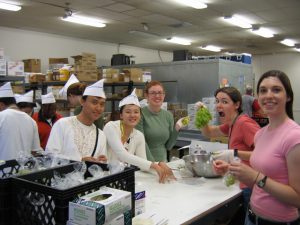
Reuben prepared food at a soup kitchen for the homeless in Los Angeles, USA as part of the WorldSmart Leadership Programme where he travelled through 7 countries with 50 participants from 28 countries. He represented Singapore in this programme during his undergraduate time at USP.
Indeed, Reuben is the hallmark of a life-long learner who has a good grasp of qualitative and quantitative problem-solving skills. His Masters programme in Oxford saw him conduct ethnographic studies by staying with several communities to understand consumer behaviour, instead of merely doing quantitative marketing models. The stint demonstrated the value of doing in-depth focus groups and interviews to understand client needs.
As USP students, we are empowered with breadth and depth of knowledge, and the privilege of being in a creative, self-driven environment with plenty of opportunities to learn from external speakers, professors, international programmes and our classmates. It is our utmost responsibility to use our experiences to make a positive difference.
We hope Reuben’s multidisciplinary thinking, curiosity and tenacity will continue to serve him and others well. We are more than glad he is back with USP.
Mr Mustafa (on the right) together with his father, Mr Izzuddin.
This prize, valued at $250 each, will be presented annually to two USP graduating students starting from this year who are not only well-rounded individuals exemplifying academic excellence, but have also reflected a strong commitment to promoting interfaith dialogues or activities related to social harmony.
For more information on other medal, awards and prizes given to outstanding USP students or graduands, please referhere or on making a gift to USP, please visit our Giving pagehere.